
What Really Determines Price Per Part in High-Volume Manufacturing Settings?
The most strategic contract manufacturing businesses understand how to optimize every stage of production, from material sourcing to quality control, while still delivering reliable, repeatable results.
At Liberty Precision, we take a comprehensive approach to high-volume manufacturing. By continuously improving our processes and investing in advanced technology, we help customers achieve cost-effective production without sacrificing the precision and quality their applications demand.
Here are some of the key factors that influence price per part.
Material Selection and Sourcing Impact Overall Cost
Raw material is one of the earliest variables that affects the cost of precision machined components. Material prices can change based on market conditions, availability, supplier relationships, and the specific alloy required for an application. Because of this, manufacturers must carefully evaluate material costs during the quoting process to create accurate and sustainable pricing.
Material Traceability Is Critical
For many industries, knowing exactly where material comes from and how it moves through production is essential.
At Liberty Precision, we maintain detailed material traceability throughout the manufacturing process. This includes working with qualified suppliers and ensuring material documentation follows each job from incoming material through final production.
Maximizing Material Efficiency Matters
Material utilization also plays an important role in overall cost. During the quoting process, our team considers factors such as:
Raw material size and availability
Finished part weight
Material removed during machining
Scrap value and recovery opportunities
By understanding the full material picture upfront, we can identify opportunities to improve efficiency and deliver better overall value.
Outside Processing Can Influence Cost and Performance
Many complex components require additional processes beyond machining, including:
Heat treating
Coatings
Plating
Surface treatments
Other specialized finishing operations
While these processes are often necessary to achieve final part requirements, they also introduce additional variables into the manufacturing process.
Strong Supplier Relationships Improve Efficiency
At Liberty Precision, we work closely with trusted suppliers to ensure secondary operations are completed efficiently and according to customer requirements.
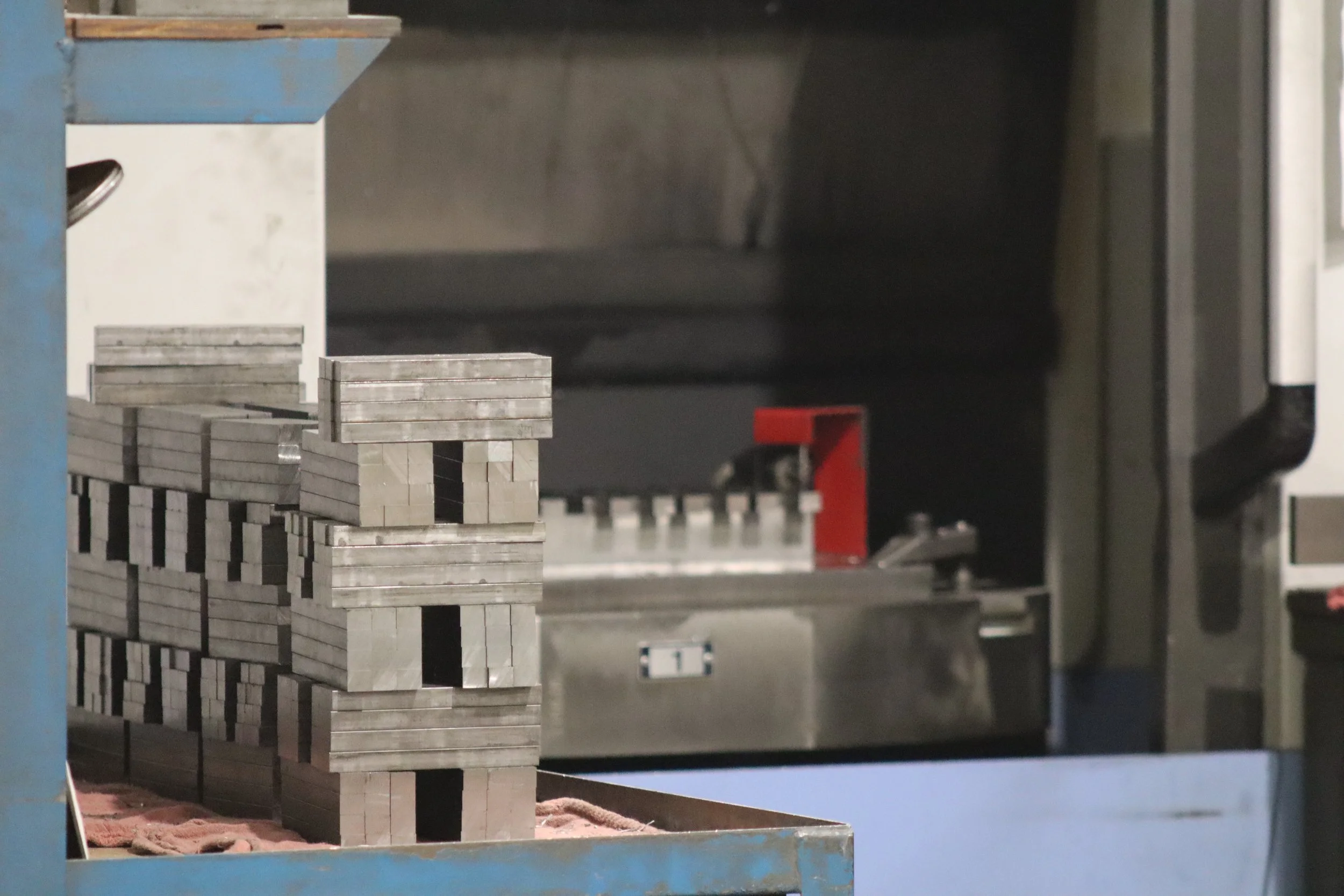
Our established vendor relationships help us:
Improve communication
Reduce transportation challenges
Maintain consistent quality
Keep production schedules moving
By carefully selecting and managing outside partners, we reduce risk while helping customers receive finished parts with fewer supply chain complications.
Part Complexity Has a Direct Impact on Cost
Not all machined components require the same amount of time. As part complexity increases, so does the amount of planning, machining, tooling, and inspection required to successfully produce the component.
Material Challenges Require Greater Expertise
Different materials behave differently during machining. Materials such as titanium, Inconel, and other difficult-to-machine alloys often require specialized tooling, optimized cutting strategies, and additional process control compared to more common materials.
Understanding how each material responds during machining helps us develop efficient processes while maintaining part quality.
Tight Tolerances Require Greater Process Control
Parts requiring extremely tight tolerances often involve additional considerations, including:
More advanced machining strategies
Additional inspection requirements
Increased process monitoring
Greater attention to tool wear and consistency
These requirements are essential for ensuring part performance but can influence overall production time.
Complex Features Increase Manufacturing Requirements
Components with intricate geometries or challenging specifications typically require more machining operations and additional verification. Reducing unnecessary complexity through design optimization and efficient machining strategies can often improve both production efficiency and overall cost.
Automation Helps Improve Efficiency and Consistency
At Liberty Precision, we leverage advanced equipment and automated processes to reduce manual handling and improve repeatability.
Automation provides several benefits:
More consistent production cycles
Reduced opportunities for human error
Greater machine utilization
Improved overall efficiency
When producing thousands or millions of components, even small improvements in process consistency can create significant benefits.
Process Stability Is Essential for High-Volume Success
A process that produces a large quantity of components but creates quality issues does not deliver true value. For high-volume manufacturing, stability is everything.
Building Reliable Processes From the Beginning
At Liberty Precision, our engineering, production, and quality teams work together to create manufacturing processes designed for long-term success.
That includes:
Establishing repeatable machining methods
Validating inspection processes
Monitoring quality throughout production
Continuously improving workflows
Why Liberty Precision Is Built for High-Volume Manufacturing
Successfully supporting high-volume production requires a complete approach focused on efficiency, quality, and continuous improvement. At Liberty Precision, we invest in the technology, people, and processes needed to help customers achieve reliable production at scale.
When you need a contract manufacturing partner capable of supporting complex, high-volume production, Liberty Precision is ready to help.
Request a quote to get started on your next project.